Week of November 24, 2025
0 reads
White House Launches Genesis Mission
President Trump signed an executive order this week to launch the Genesis mission, a massive initiative led by the Department of Energy with the goal, "... to train scientific foundation models and create AI agents to test new hypotheses, automate research workflows, and accelerate scientific breakthroughs." Likened to a modern Manhattan project, the effort aims to integrate national labs, federal datasets, and state-of-the-art AI to compress timelines for scientific research from years to weeks in fields like manufacturing, biotechnology, critical materials, nuclear energy, quantum computing, and semiconductors. The goals of this effort seem to rhyme with those of the startups Periodic Labs and Bezos-led Project Prometheus, both coming out of stealth with funding announcements in the last few months.Anthropic Releases Claude Opus 4.5
Anthropic released Claude Opus 4.5, their latest and most capable model to date. The model notably demonstrates a jump in coding performance, climbing to the top of the SWE-bench leaderboard.Stripe and Shopify show off for Black Friday and Cyber Monday
This year, Stripe constructed a physical diorama of a city displaying transaction volume data and featuring top Stripe customers. Shopify created a digital pinball game, including a globe with a real-time visualization of transactions happening across the world.Shai-Hulud 2.0: Massive npm Supply Chain Attack
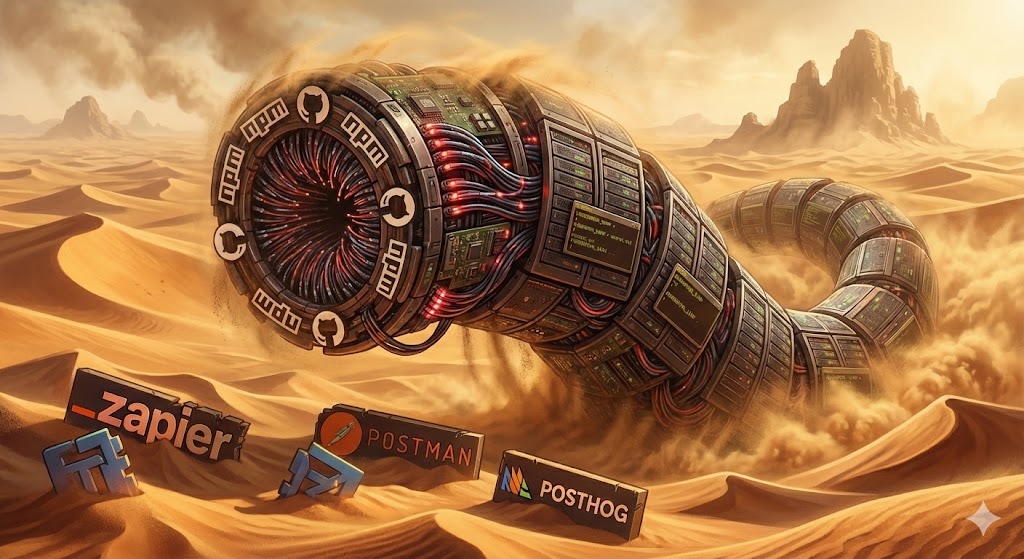 Following a similar attack in September, Shai-Hulud 2.0 has returned with a massive npm supply chain attack creating over 25,000 malicious repositories. The attack compromised major organizations like Zapier, Postman, and PostHog by utilizing malicious GitHub Actions workflows to exfiltrate secrets from infected developer environments.